
Be honest: when’s the last time you actually moved the toaster and wiped underneath it?
Most of us wipe the counters, rinse the sink, and call the kitchen “clean.” And sure, it looks clean. But your kitchen is basically a science experiment happening in slow motion — grease climbing up cabinet fronts, crumbs settling into drawer tracks, and a film building up on surfaces you touch every single day without ever really cleaning.
So how often should you actually deep clean your kitchen? Not just wipe-it-down clean, but actually clean? Let’s break it down room by room, zone by zone, so you know exactly what needs attention and when — without turning your Saturday into a full-blown renovation project.
Table of Contents
Why Your Kitchen Gets Dirtier Than You Think
Kitchens are the hardest-working room in the house, and they get dirty in layers most people never see.
Every time you cook, tiny grease particles float up and land on cabinet doors, range hoods, and even the tops of your fridge. Every time you touch the fridge handle, flip a light switch, or grab a spice jar, you leave behind oils and bacteria. None of it is visible day to day, but it adds up fast, especially with regular cooking.
Rochester’s humidity swings make it worse. Sticky summer air helps grease and grime cling to surfaces, while dry winter heat means dust and allergens circulate more. Add hard water from the tap, which leaves mineral spots on faucets and glassware, and you’ve got a kitchen that needs more than a quick wipe-down to actually stay clean.
The Zones People Clean Least
Most people rotate through the same few spots on autopilot: counters, sink, maybe the stovetop if something splattered. Everything outside that rotation, cabinet tops, the inside of the microwave, the seal around the fridge door, just quietly gets skipped week after week.
It’s not laziness, it’s just that those spots aren’t part of the daily routine, so they never make it onto the mental checklist. That’s exactly why a scheduled rhythm works better than “I’ll get to it eventually.”
How Often You Should Clean Every Kitchen Zone
Not every surface needs the same amount of attention. Here’s a realistic breakdown of what actually needs cleaning, and how often.
| Zone | How Often | Why |
|---|---|---|
| Countertops | Daily | Food contact means bacteria builds up fast |
| Sink and faucet | Daily | Constant moisture breeds bacteria and buildup |
| Stovetop | Weekly | Grease splatter hardens the longer it sits |
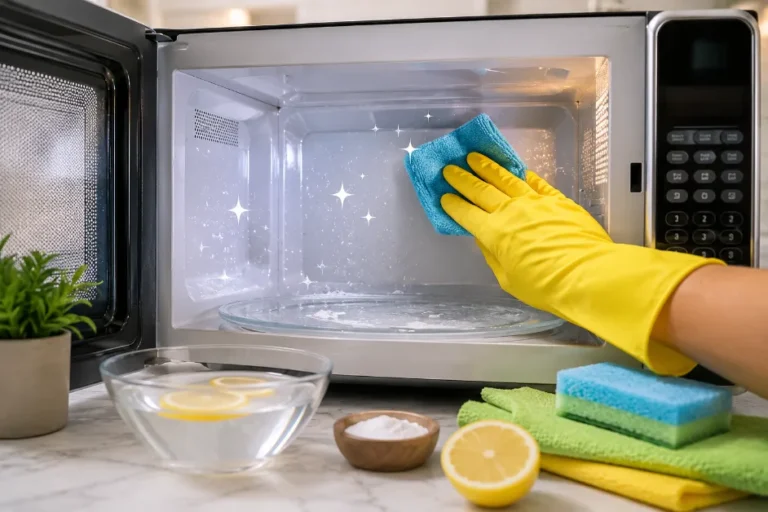
| Microwave | Weekly | Splatters bake on and get harder to remove |
| Fridge shelves | Monthly | Spills and expired food hide in the back |
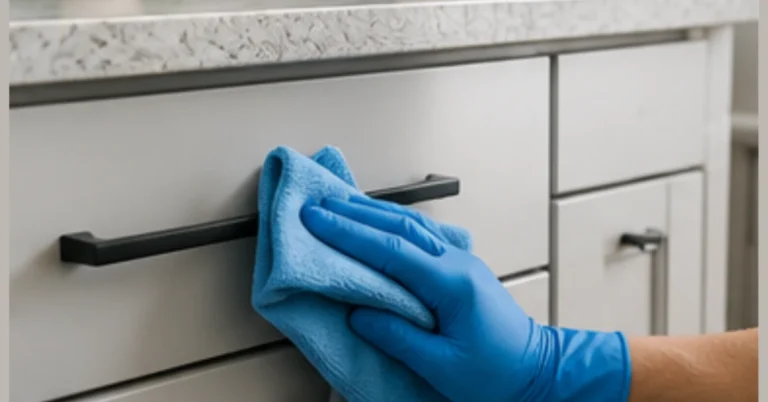
| Cabinet fronts | Monthly | Grease film builds up near the stove especially |
| Oven | Every 2-3 months | Baked-on grease needs real time to loosen |
| Range hood filter | Every 2-3 months | Grease buildup reduces how well it actually vents |
| Cabinet interiors | 2x a year | Crumbs and liners wear out faster than you’d think |
| Behind and under appliances | 2x a year | The spot everyone forgets, and it shows |
A quick way to remember it: anything that touches food or water daily needs daily attention, anything that catches grease needs weekly to monthly attention, and anything hidden or hard to reach needs a seasonal reset.
Signs Your Kitchen Needs a Deep Clean Right Now
Sometimes your kitchen tells you exactly what it needs, if you’re paying attention. Here’s what to look out for:
- A sticky feeling on cabinet fronts, especially near the stove. That’s grease film, and it only gets thicker with time.
- A faint smell that won’t go away, even after you take the trash out. Usually means something’s lingering in the fridge, disposal, or drain.
- Grime in the grout or backsplash tile that doesn’t wipe off with a regular sponge.
- Visible buildup around the stovetop knobs and burner rings, where daily wiping usually misses.
- A fridge that needs a game plan before you open it, because you’re not sure what’s expired.
- Dust or grease on top of the fridge or cabinets, somewhere nobody looks unless they’re standing on a step stool.
If two or three of these sound familiar, it’s probably been longer than you think since your last real deep clean.

Your Realistic Kitchen Cleaning Plan
Here’s the thing: you don’t need to deep clean your whole kitchen every week. You just need to know what belongs in each rhythm.
Daily (5 minutes, tops)
- Wipe down counters and the stovetop
- Wash or load dishes so they don’t sit overnight
- Wipe the sink and give the faucet a quick shine
- Take out any food trash so it doesn’t sit and smell
Weekly (20-30 minutes)
- Scrub the stovetop and knobs properly, not just a wipe
- Wipe down the microwave inside and out
- Sweep and mop the floor
- Clean the sink drain and disposal
- Wipe down cabinet handles and light switches
Monthly (an hour or so)
- Clean out the fridge, toss anything expired
- Wipe down cabinet fronts, especially near the stove
- Clean the inside of the microwave more thoroughly
- Wash the trash can itself, not just the bag
Seasonally (the real deep clean)
- Clean the oven inside, including the door glass
- Clean or replace the range hood filter
- Empty and wipe down cabinet interiors
- Move appliances and clean behind and underneath them
- Wash light fixtures and wipe down the tops of cabinets
You can also check detailed post on kitchen cleaning checklist.
Quick tip
Pair your seasonal kitchen deep clean with your regular seasonal home cleaning. If you’re already tackling spring or fall cleaning elsewhere in the house, the kitchen might as well get the same treatment while you’re in cleaning mode.
Why a Rhythm Beats a Once-a-Year Marathon
Trying to deep clean an entire neglected kitchen in one weekend is exhausting, and honestly, it’s why so many people put it off entirely. Breaking it into daily, weekly, monthly, and seasonal habits means no single session ever feels overwhelming.
It also means less buildup overall. Grease that gets wiped weekly never gets the chance to harden into the kind of grime that needs scraping. A little consistent effort beats one exhausting deep clean every single time.
What Actually Counts as a “Deep Clean”
There’s a big difference between wiping a counter and deep cleaning a kitchen, and it trips people up all the time.
| Regular Cleaning | Deep Cleaning |
|---|---|
| Wipe visible surfaces | Clean behind and under appliances |
| Rinse the sink | Scrub grout, drains, and disposal |
| Quick stovetop wipe | Degrease knobs, burner rings, and the range hood |
| Spot-clean the fridge | Empty, wash shelves, and toss expired items |
| Sweep the floor | Mop, plus clean along the baseboards |
| Wipe cabinet handles | Wash cabinet fronts and interiors |
Regular cleaning keeps things looking tidy day to day. Deep cleaning is what actually resets the kitchen and gets rid of the buildup regular cleaning can’t touch. Both matter, they’re just not interchangeable.
What are The Common Kitchen Cleaning Mistakes Rochester Homeowners Make
We know its not easy to clean you kitchen. That is why we are telling you these points, so you can avoid in your cleaning and get the better results.
Fighting Hard Water the Wrong Way
Rochester’s water leaves mineral spots on faucets, stainless steel, and glassware fast. Regular all-purpose cleaner just smears it around. A vinegar-based cleaner or a dedicated hard water spray actually breaks down the mineral buildup instead of pushing it around.
Skipping the Range Hood Filter
It’s one of the most-skipped spots in the whole kitchen. A greasy filter doesn’t just look bad, it also means your range hood isn’t actually pulling smoke and grease out of the air like it should.
Cleaning the Oven Only When It Smokes
Waiting until the oven smokes during preheating means the buildup has been there a while already. A quicker seasonal wipe-down keeps it from getting to that point.
Using the Same Cloth for Everything
Grabbing the same sponge for counters, the stovetop, and the sink just spreads bacteria and grease around instead of removing it. Separate cloths for food surfaces versus everything else make a real difference.
Forgetting the Fridge Door Seal
The rubber gasket around the fridge door collects crumbs and grime that most people never think to check. A dirty seal doesn’t just look bad, it can actually keep the door from sealing properly, which makes your fridge work harder than it needs to.
Tips to Make Kitchen Cleaning Feel Less Like a Chore
- Clean as you cook. Wiping a spill the second it happens takes ten seconds. Waiting until it dries takes ten minutes.
- Keep a designated “kitchen only” caddy with your go-to cleaners so you’re never hunting for supplies mid-task.
- Run the dishwasher and disposal with a cup of vinegar once a month to cut down on lingering odors.
- Set a recurring 15-minute timer once a week for a stovetop and cabinet-front wipe-down. Small and consistent beats big and rare.
- Declutter the counters first. A clear counter is genuinely faster to clean than one covered in mail, mugs, and mystery cords.
Products Worth Having on Hand
- A degreaser spray for stovetops and range hoods
- A vinegar-based cleaner for hard water spots
- Microfiber cloths, which grab grease better than paper towels
- A grout brush for tile backsplashes
- Baking soda, useful for both odor control and gentle scrubbing
Frequently Asked Questions
When You’d Rather Let Someone Else Handle It
Knowing the schedule is one thing. Actually finding the time to scrub behind the stove every few months is another story entirely, and that’s completely fair.
At Bright Nest Cleaners, our kitchen deep cleaning covers everything on this list and then some, degreasing, appliance detailing, cabinet fronts, the works, so you get the reset without giving up your weekend. A few ways we can help:
- Kitchen deep cleaning — the full reset covered in this guide, done properly and without the elbow grease being yours.
- Recurring cleaning plans — so the weekly and monthly upkeep happens on autopilot, and the kitchen never gets far enough behind to need a big reset.
- One-time deep cleans — perfect if it’s been a while and you just want a clean slate before getting back on a regular rhythm.
- Seasonal deep cleans — pairing your kitchen reset with the rest of the home, timed to what Rochester weather is actually doing.
Insured, Bonded, Guaranteed
We’re insured, bonded, and know exactly what Rochester kitchens deal with, from hard water spots to humidity-driven grease buildup. If your kitchen could use a proper reset, give us a call and we’ll get you a straightforward, upfront quote. No pressure, no upsell, just a kitchen that stays clean longer.



One Comment
Comments are closed.