In Rochester, we don’t just close the windows for winter. We seal them. Plastic film goes up; storm windows go down. Draft stoppers go under doors, and for the next four or five months, the same air just keeps swirling around your house.
Cozy? Absolutely. Fresh? Not so much. By February, many homes feel stuffy. Noses get stuffy too. Dust seems to appear out of nowhere. Windows drip every morning, and someone in the house is always sneezing.
Sound familiar? Let’s fix it. This guide covers practical, no-nonsense ways to keep your indoor air cleaner all winter, with tips made for Rochester homes and Rochester winters.
Table of Contents
Quick answer
To keep the indoor air cleaner during a long Rochester winter, focus on four things: remove dust (damp dust and use a HEPA vacuum weekly) and control humidity (aim for 30–50%). Also try to stop moisture problems early (wipe window condensation and check the basement), and cut pollution at the source (vent while cooking, keep shoes at the door, and change your furnace filter). A few small habits make a big difference when the windows stay shut from November to March.
Why Winter Air Gets Stale in Rochester Homes
First, the big picture. The EPA reports that people in the U.S. spend roughly 90 percent of their day inside and that certain indoor pollutants are frequently two to five times more concentrated than they are outdoors. Now add a Rochester winter to that.
1. Our Homes Stay Closed for Months
Rochester’s snow season usually runs from late November into early April. That’s months of sealed windows, sealed doors, and very little fresh air. Every bit of dust, pet dander, cooking smoke, and moisture your household makes? It stays inside with you.
2. Forced-Air Heat Moves Everything Around
Forced-air furnaces blow warm air through ducts and vents all day. That’s great for comfort. But it also circulates dust mites, mold spores, and pet dander around your home while it’s sealed up.
3. Cold Windows Mean Condensation
When warm, moist indoor air hits a cold window, it turns to water and that’s condensation. The big difference between frigid outdoor air and heated indoor air creates condensation on windows and walls, which can feed mold growth. In older Rochester homes with original single-pane windows, this happens a lot.
4. Basements Add Moisture
Many Rochester basements are damp, especially in older homes. Moisture from below can drift up into your living space, bringing that musty smell with it.
5. Long, Cloudy Winters Keep Us Inside
The National Weather Service describes Rochester winters as generally cold, cloudy, and snowy. We’re not exactly throwing open the patio doors in January. So we spend even more time breathing indoor air.
Before closing the window, a Thanksgiving occasion comes up in Rochester. If you want to clean your home without any hassle on this day, read our full Thanksgiving cleaning checklist and enjoy your fest.
What’s Actually in Your Winter Air?
Let’s meet the usual suspects.
| Pollutant | Where it comes from | Why it matters |
|---|---|---|
| Household dust | Skin flakes, fabric fibers, outdoor dirt, pet hair | Carries allergens and irritants |
| Dust mites | Bedding, carpets, upholstery | Common allergy and asthma triggers |
| Pet dander | Cats and dogs (even hypoallergenic breeds) | Builds up fast in closed homes |
| Mold spores | Window sills, bathrooms, basements | Allergies and that musty smell |
| Cooking fumes | Stovetop cooking, especially frying | Smoke, grease, and particles |
| Combustion gases | Gas stoves, fireplaces, wood stoves, furnaces | Can irritate lungs. Keep CO alarms working. |
| VOCs | Air fresheners, candles, cleaning sprays, paint | Can cause headaches and irritation |
| Road salt and grime | Tracked in on boots | Adds fine dust as it dries |
| Radon | Soil under your home | Odorless gas; only a test can find it |
The good news? Most of these respond well to simple cleaning habits.
Step 1: Win the War on Dust
Dust is the foundation of indoor air problems. Tackle it first.
Dust the Right Way
- Use a damp microfiber cloth, not a feather duster. Dry dusting just launches dust into the air.
- Clean from top down: start with ceiling fans and shelves, and save the floors for the end.
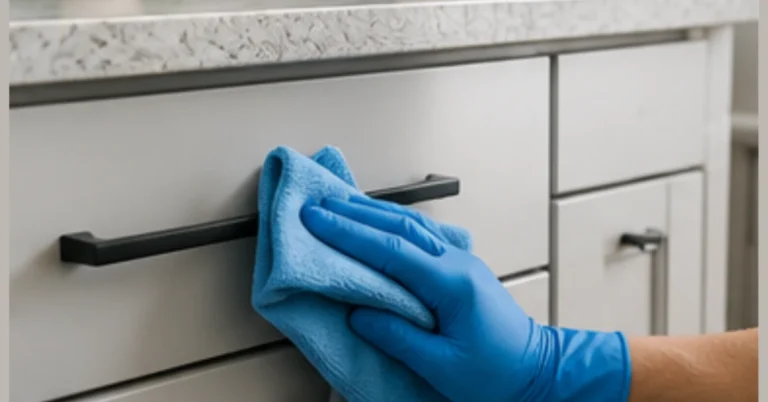
- Don’t forget the high spots. Tops of door frames, picture frames, and kitchen cabinets.
- Hit the heat sources. Radiators, baseboard heaters, and vent covers collect tons of dust.
Vacuum Smarter
- Use a vacuum with a HEPA filter if you can. It captures tiny particles rather than pushing them back into the air.
- Vacuum at least once a week in winter, and twice a week in homes with pets.
- Go slow. Quick passes leave dust behind.
- Use attachments on couches, curtains, and along baseboards.
- Empty the canister outside or into a bag you seal right away.
Handle Soft Surfaces
Soft stuff holds dust like a sponge.
- Wash throw pillows and blankets regularly
- Vacuum upholstered furniture weekly
- Shake out small rugs outdoors (on a dry, non-snowy day, if you can find one)
- Vacuum curtains, or take them down and wash them mid-winter
Step 2: Get Humidity Just Right
Humidity is the Goldilocks problem of Rochester winters. Too dry, and you wake up with a sore throat, cracked skin, and static shocks every time you touch a doorknob.
Too humid, and your windows drip, mold sneaks onto sills, and dust mites throw a party.
The Sweet Spot
| Humidity level | What you’ll notice | What to do |
|---|---|---|
| Below 30% | Dry skin, static, scratchy throat, cracking wood | Use a clean humidifier. Add moisture gradually. |
| 30–50% | Comfortable. Fewer mites and less mold. | You’re in the sweet spot. Keep checking. |
| 50–60% | Window condensation, stuffy feeling | Run bath fans longer. Turn down the humidifier. |
| Above 60% | Musty smells, mold on sills, damp basements | Dehumidify. Fix moisture sources. |
Tip
Buy a cheap digital hygrometer (humidity meter). They cost less than a pizza, and the EPA recommends using one to track your levels. Put one in your main living area and one in the basement.
A Rochester Tip: Hard Water and Humidifiers
Here’s a local detail most guides skip. Parts of the Rochester area get their water from Lake Ontario, and some get it from Hemlock Lake. Lake Ontario water is a bit harder, with just over 7 grains of hardness.
Why does that matter? If you use tap water in an ultrasonic humidifier, the minerals can come out as a fine white dust. It settles on furniture and floats in the air.
- Use distilled water in ultrasonic humidifiers
- Clean your humidifier often, following the manufacturer’s directions
- Empty and dry it when you’re not using it, so mold and bacteria don’t grow inside
A dirty humidifier can make your air worse, not better.
Step 3: Stop Window Condensation Before It Turns Into Mold
This one’s huge in older Rochester homes. Every morning, you look at your windows and see water droplets. Maybe little puddles on the sill. Maybe black spots starting in the corners. Here’s how to handle it.
Daily Habits
- Wipe condensation every morning with a microfiber cloth or a small squeegee
- Open blinds and curtains during the day so air can reach the glass
- Don’t block windows with heavy furniture
Weekly Habits
- Clean window sills and tracks with warm water and a little dish soap
- Dry them completely afterward
- Check the corners for dark spots
Cleaning Small Mold Spots on Sills
For small spots on hard, non-porous surfaces:
- Wear gloves
- Scrub with water and detergent
- Dry completely
- Fix the moisture problem, or it’ll come right back
The EPA’s big message on mold is simple: the key to mold control is moisture control. Cleaning spots without fixing the moisture is like mopping with the faucet running.
Older home note: If your windows are original and painted, don’t scrape or sand the paint. Homes built before 1978 may have lead paint. Wipe gently instead.
When to call a pro: If mold keeps coming back, covers a large area, or you smell mustiness throughout the house, talk to a mold professional. New York has specific rules for larger mold remediation projects.

Step 4: Cut Pollution at the Source
It’s easier to keep pollutants out than to clean them up later.
In the Kitchen
- Run your range hood fan every time you cook, especially on a gas stove
- Use the back burners when you can; hoods capture them better
- Keep the fan running for 10–15 minutes after you finish
- Wipe the stovetop after cooking so grease doesn’t build up
In the Bathroom
- Run the exhaust fan during showers and for 20–30 minutes after
- Squeegee shower walls to cut humidity
- Wash bath mats and towels often
At the Front Door (This Is a Big One)
Rochester winters mean road salt, slush, and grime. It all comes in on boots.
- Make it a shoes-off home for the winter
- Use two mats: a scraper mat outside and an absorbent mat inside
- Keep a boot tray by every entry door
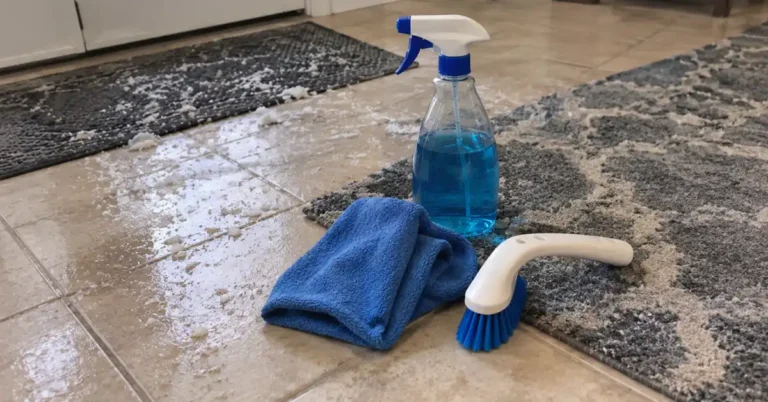
- Wipe the entry floor often so dried salt doesn’t turn to dust
You can also check our guide on clean road salt stains from floor and rugs to keep your home clean during winter.
Skip the Fake Fresh.
- Go easy on air fresheners and plug-ins. They add chemicals to the air without removing anything.
- Limit candles and incense. They release smoke and particles.
- Choose simple cleaners. Mild dish soap, water, and microfiber handle most jobs.
Fireplaces and Wood Stoves
Nothing beats a crackling fire on a snowy night. Just be smart about it.
- Have your chimney inspected each year
- Make sure the damper is open before you light a fire
- Burn only dry, seasoned wood
- Keep your carbon monoxide alarms tested and working.
Step 5: Let the HVAC Do Some Work
Your heating system can help clean your air if you treat it right.
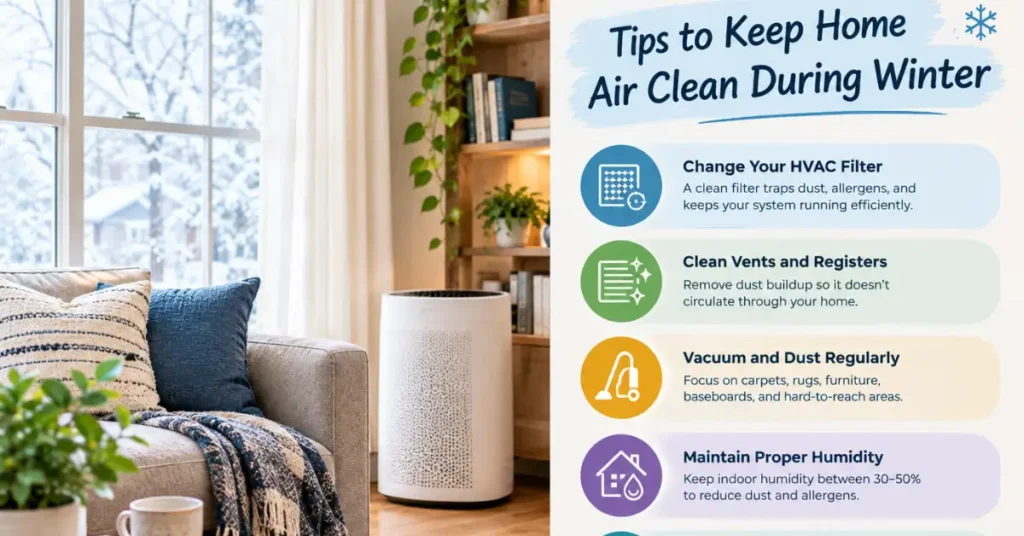
- Change the furnace filter every 1–3 months. More often with pets or allergies.
- Pick a good filter. Ask your HVAC pro what your system can handle.
- Keep vents clear. Don’t cover registers with rugs or furniture.
- Clean vent covers every month or two.
What About Air Purifiers?
A portable air purifier with a true HEPA filter can help, especially in bedrooms.
- Size it for the room. Check the box for the square footage it handles.
- Run it in the bedroom while you sleep.
- Replace filters on schedule.
- Avoid “ozone generator” air purifiers. The EPA warns that ozone can irritate your lungs.
Step 6: Sneak in Some Fresh Air
Yes, it’s 18°F outside. Hear us out. Even a little fresh air helps flush out stale indoor air.
- Open a window for 5–10 minutes on a milder, sunny afternoon
- Open windows on opposite sides of the house for a quick cross breeze
- Do it right after cleaning to clear any dust you stirred up
- Close them before the house cools down too much
A short burst of fresh air is way better than none at all.
Step 7: Test for Radon While You’re at It
Here’s something no one thinks about until they should. Radon is a natural, radioactive gas that comes from soil and rock. It can seep into homes through cracks in the foundation. The New York State Department of Health calls it the leading cause of lung cancer among nonsmokers.
You can’t see it. You can’t smell it. The only way to know is to test.
- New York suggests fixing your home if radon tests at 4 pCi/L or higher
- Testing requires closed-house conditions. Winter makes that easy, since your windows are already shut.
- The NYS Department of Health sells radon test kits for $12.25, including lab analysis and postage
- NYSDOH suggests testing every five years
It’s cheap, easy, and a smart part of any winter air plan.
Your Room-by-Room Winter Air Checklist
Save this checklist and apply when you want to keep your air clean.
Bedrooms
- Wash sheets and pillowcases weekly in hot water
- Vacuum the mattress edges and under the bed
- Wipe window condensation each morning
- Damp-dust nightstands and dressers
- Run a HEPA air purifier if anyone has allergies
Living Room
- Vacuum couches and cushions weekly
- Wash throws and pillow covers
- Dust radiators, vents, and baseboards
- Clean window sills
Kitchen
- Use the range hood every time you cook
- Wipe the stovetop and backsplash after cooking
- Clean the range hood filter monthly
Bathrooms
- Run the exhaust fan during and after showers
- Squeegee shower walls
- Clean grout and caulk corners for mildew
Entryway
- Two mats: outside scraper, inside absorbent
- Boot tray at every door
- Wipe salt residue off floors a few times a week
Basement
- Check humidity with a hygrometer
- Run a dehumidifier if it’s above 50%
- Keep stored items off the floor
- Test for radon
Your Winter Cleaning Schedule at a Glance
| How often | Task |
|---|---|
| Daily | Wipe window condensation. Run bath and kitchen fans. |
| A few times a week | Wipe the entryway floor. Empty the boot tray. |
| Weekly | Damp-dust. HEPA vacuum. Wash bedding. |
| Every 2 weeks | Vacuum upholstery and curtains. Clean window sills. |
| Monthly | Clean vent covers. Clean the range hood filter. Check humidity levels. |
| Every 1–3 months | Change the furnace filter |
| Once a winter | Wash curtains. Deep clean under furniture. Test for radon (every 5 years). |
Frequently Asked Questions
Keep Indoor Air Clean During Winter | Breathe Easier Until Spring
Rochester winters are long. But your air doesn’t have to feel stale. Dust damp, vacuum smart. Keep humidity in the sweet spot. Wipe those windows and let a little fresh air in when you can. Your nose, your lungs, and your family will thank you by the time the Lilac Festival rolls around.
How Bright Nest Cleaners Can Help
At Bright Nest Cleaners, we’re a local Rochester cleaning team. We know what months of closed windows do to a home, especially the older homes that make this city so special.
Here’s how we help you breathe easier all winter:
- Recurring winter cleaning: weekly or biweekly visits to keep dust from building up
- Deep cleaning: baseboards, vent covers, radiators, ceiling fans, and those high spots nobody reaches
- Window sill and track cleaning: where condensation and grime love to hide
- Upholstery and soft-surface care: vacuuming couches, curtains, and cushions
- Entryway detailing: tackling winter salt, slush, and grime
- Old-home care: gentle cleaning for plaster, original woodwork, and hardwood floors
We’re a cleaning team, not HVAC, mold remediation, or radon specialists. When something’s outside our lane, we’ll tell you honestly and point you in the right direction.
Where we clean: Rochester and nearby towns including Brighton, Pittsford, Penfield, Webster, Fairport, Irondequoit, Greece, Henrietta, Gates, and Chili. You’ll get the same background-checked cleaner, clear pricing up front, and a local team that answers its own phone.
Insured, Bonded, Guaranteed
We’re insured, bonded, and local to Rochester. Every clean is handled with care for your home and its materials, never a one-size-fits-all approach.
Get your free winter cleaning quote and make this the freshest winter yet.
Sources
- US EPA, Indoor Air Quality (Report on the Environment): https://www.epa.gov/report-environment/indoor-air-quality
- US EPA, A Brief Guide to Mold, Moisture and Your Home: https://www.epa.gov/mold/brief-guide-mold-moisture-and-your-home
- New York State Department of Health, Radon: https://www.health.ny.gov/environmental/radon/
- New York State Department of Health, Amanda’s Law: https://www.health.ny.gov/environmental/emergency/weather/docs/co_amandas_law.pdf
- National Weather Service Buffalo, Rochester Climate Narrative: https://www.weather.gov/buf/ROCclifo
- HeyAllergy, Rochester, NY Allergy Forecast: https://www.heyallergy.com/allergy-forecast/rochester-ny
- Aquanology, Rochester, NY Water Conditioning (water source and hardness): https://aquanology.com/rochester-ny-water-conditioning-treatment/