
It’s the first chilly night of October. You finally give in and turn up the thermostat. A few minutes later, your nose picks up something: warm, toasty. A little like burnt toast mixed with a dusty attic. Ah yes, the official smell of Rochester heating season.
If you’ve lived here a while, you know this smell. If you’re new, you might be wondering whether your house is about to catch fire. (It almost certainly isn’t.) Let’s break down what that smell really is, when it’s totally normal, when it’s a real warning sign, and how a little cleaning now can stop it before it starts.
Table of Contents
Quick answer
That burning dust smell when you first turn on the heat is usually just dust that settled on your furnace, radiators, or baseboard heaters over the summer. When they heat up, the dust cooks off. It normally vanishes within 30 minutes to a few hours. To prevent it, clean radiators, vents, and baseboard fins and change your furnace filter before the first cold night.
When Does Heating Season Start in Rochester?
Heating season in Rochester starts October 1 and runs through May 31.
Timing matters; you want to clean before the heat comes on, not after. Rochester usually gets its first freeze snap in early to mid-October. That’s often when people start reaching for the thermostat. So here’s the sweet spot:
| When | What to do |
|---|---|
| Late September | Clean radiators, vents, and baseboards. Buy a new furnace filter. |
| Early October | Swap the filter. Test your carbon monoxide alarms. Book HVAC service. |
| First cold night | Turn on the heat. Open a window for a bit if you smell dust. |
| November | Quick re-dust of radiators and vents |
| Every 1–3 months | Check and change your furnace filter. |
What Actually Causes That Burning Dust Smell?
Dust that settled on your furnace over the warm months burns off when the heat first turns on. It’s harmless and usually fades in a day or two.
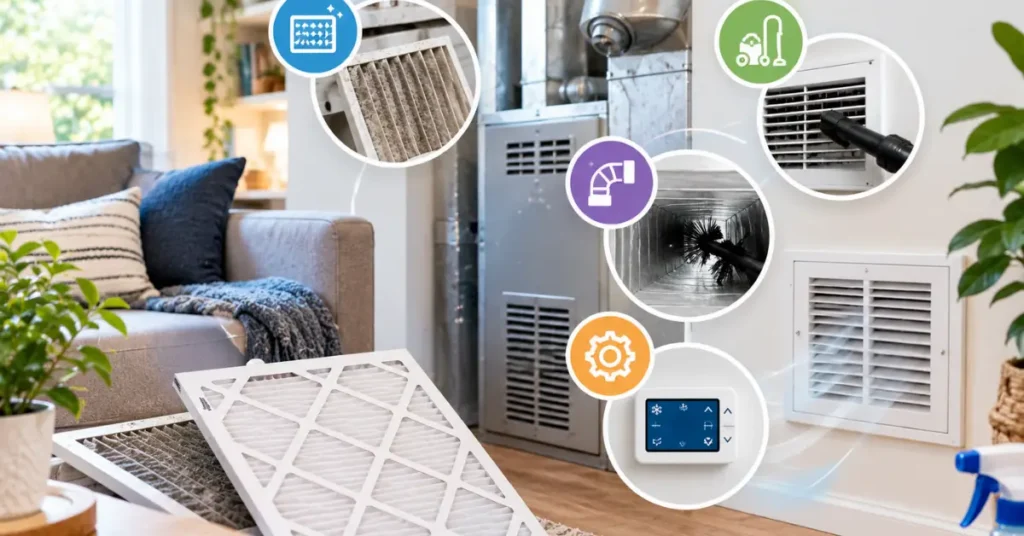
Here’s the simple science. All summer long, your heating system just sits there. Doing nothing. Collecting dust. Dust floats down onto:
- The burner and heat exchanger inside your furnace
- The fins and coils of baseboard heaters
- The surface and gaps of cast-iron radiators
- Heat registers and ductwork
When you finally turn on the heat, those parts get hot fast. The dust sitting on them heats up and burns off. That creates the smell, and it drifts out through your vents and registers. It’s basically your heater saying, “Whoa, it’s been a while.”
Why It Can Be Worse in Rochester Homes
Rochester’s cold falls fast, so many homes switch the heat on for the first time all at once, and a full season of dust burns off in one go. Many older homes also have aging furnaces and long, dusty duct runs, which makes the smell stronger.
A few local factors can make the smell stronger here.
1. Long summers with windows open. We wait all winter for warm weather. Then windows stay open from May to September. Pollen, dust, and outdoor grime drift in and settle.
2. Older heating systems. Many older Rochester homes still have cast-iron radiators. They’re gorgeous. But their deep grooves and gaps are dust magnets.
3. Pet hair. Cats love sleeping on warm radiators. Dogs shed near baseboards. All that fur ends up on heating surfaces.
4. Summer projects. Did you renovate over the summer? Construction dust gets into ducts and settles on heaters. The first heat cycle after a renovation can smell extra strong.
How do I know its Normal Smell or Warning Signs?
A dusty or hot smell that fades within a day or two is normal. Burning plastic, electrical, or rotten-egg smells; smoke; or a smell that won’t go away are warning signs. So shut the system off and call an HVAC technician (or leave and call the gas company if you smell gas).
This is the most important section. Please don’t skip it. Most heating smells are harmless. Some are not.
| What you smell | What it might mean | What to do |
|---|---|---|
| Burning dust fades within hours | Normal dust burn-off | Open a window. Change the filter. Clean heating surfaces. |
| Burning dust that lasts for days | Very dirty filter, ducts, or system | Change the filter. Clean vents. Call an HVAC pro if it continues. |
| Rotten eggs or sulfur | Possible natural gas leak | Leave right away. Call RG&E or 911 from outside. |
| Electrical or burning wire | Overheating motor or wiring | Turn off the system. Call an HVAC pro. |
| Burning plastic | Overheated parts, or something touching a heater | Shut off power. Check for items near heaters. Call a pro. |
| Oily smell (oil heat) | Possible oil leak or equipment problem | Call your oil heat technician |
| Musty or moldy | Moisture in ducts, a humidifier, or the basement | Check for dampness. See our winter air quality guide. |
If You Smell Gas: Do This
RG&E’s advice is simple: get up, get out, and get away.
- Leave the house immediately. Take everyone with you, including pets.
- Stay away from light switches, appliances, and your phone while you’re inside, since any of them could give off a spark.
- Call from a safe place, like a neighbor’s house.
- Call the RG&E Gas Emergency line at 1-800-743-1702, or 911.
- Give your exact address and cross streets.
Don’t assume someone else already called. Make the call.
(If your gas comes from a different provider, keep their emergency number handy too.)
Don’t Forget Your CO Alarms
Heating season is also carbon monoxide season. Under New York’s Amanda’s Law, carbon monoxide alarms are required in residential buildings, including one- and two-family homes, condos, co-ops, and apartment buildings.
Before you turn the heat on:
- Press the test button on every CO alarm
- Replace batteries if needed
- Check the expiration date on the back (most alarms don’t last forever)
How to Clean Your Heating System Before Winter?
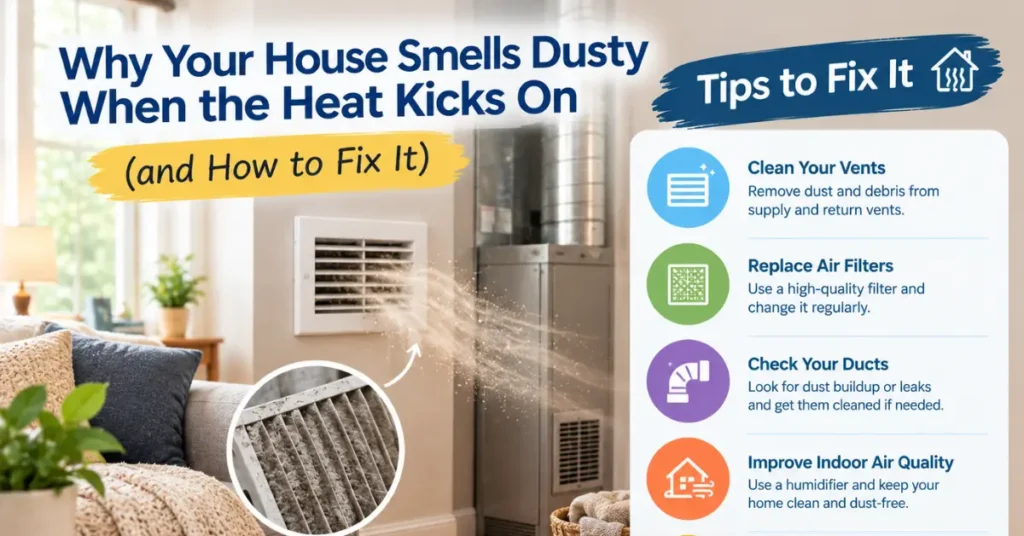
Before winter, turn off the power and replace the furnace filter. Vacuum the vents, registers, and the area around the furnace, then wipe down the vent covers. Run the system for a short test, and book a yearly professional tune-up to clean the burners and check the heat exchanger.
Okay. Here’s the fun part. (Well, fun-ish.)
Safety first
Make sure every heater is off and completely cool before you clean it. Never spray water or cleaner into a furnace or electrical heater.
Step 1: Change Your Furnace Filter
This is the easiest win in the whole guide. A dirty filter can’t catch dust. So dust goes straight into your ducts and rooms.
- Turn off the furnace
- Slide out the old filter and note the size printed on the edge
- Slide in a new filter, with the arrow pointing toward the furnace
- Write the date on the filter with a marker
Carrier suggests replacing furnace air filters every 30 to 90 days. Homes with pets, allergies, or recent renovations should aim for the shorter end.
Step 2: Clean Heat Registers and Vents
Registers are the metal grates on your floors or walls. They catch a surprising amount of stuff. Lego pieces. Dog hair. That earring you lost in 2023.
- Lift the register cover off (most just pull straight up)
- Vacuum inside the opening as far as your hose reaches
- Wash the cover in warm, soapy water
- Dry it completely and put it back
Tip
Rugs and furniture blocking vents make your heat work harder. Leave a little breathing room.
Step 3: Clean Your Radiators
Radiators are where the real dust hides. Here’s how to get it out.
You’ll need:
- A long, skinny radiator brush (they’re cheap online)
- A vacuum with a crevice tool
- An old towel or sheet
- Microfiber cloths
- Warm water and mild dish soap
How to do it:
- Make sure the radiator is cool.
- Lay a damp towel on the floor under and behind the radiator. It catches falling dust.
- Vacuum the top and the sides with the crevice tool.
- Slide the radiator brush down between the sections. Work top to bottom.
- Vacuum again to grab the dust you knocked loose.
- Wipe the outside with a moist cloth and a drop of dish soap.
- Don’t forget the wall and floor beneath the radiator. Dust piles up back there.
Old radiator trick
Some people use a hair dryer on a cool setting to blow dust out from between sections onto the damp towel. It works surprisingly well on tight gaps.
Important Note About Old Painted Radiators
Many Rochester radiators have been painted over and over for decades. If your home was built before 1978, some of those paint layers may contain lead.
- Don’t sand, scrape, or wire-brush old radiator paint
- Don’t use harsh abrasives on peeling or chipped paint
- Wet-wipe instead of dry dusting to keep dust down
- If paint is peeling badly, call a lead-safe certified contractor for repairs
A gentle wipe is fine, scraping is not.
Step 4: Clean Baseboard Heaters
Baseboard heaters have thin metal fins inside. Those fins trap dust like crazy.
- Turn off the power at the thermostat. For electric baseboards, switch off the breaker too.
- Let them cool completely.
- Pop off the front cover if your model allows it.
- Run a soft brush attachment lightly over the fins to pull off the dust.
- If any fins are bent, ease them back into place with a fin comb or a butter knife, working slowly.
- Clean the cover by wiping it with a damp cloth.
- Reattach the cover, then turn the power back on.
Step 5: Dust Around Every Heat Source
Don’t forget the areas around your heaters:
- Window sills above radiators
- Curtains hanging near heat sources (wash or vacuum them)
- Furniture sitting right against baseboards
- The top of the furnace itself (a quick wipe of the outside only)
Fire safety tip
Keep curtains, furniture, and anything flammable a safe distance from radiators, baseboard heaters, and space heaters.
Step 6: Don’t Forget Space Heaters
That little space heater from the closet? It’s been collecting dust since March.
- Unplug it
- Vacuum the vents and grill
- Wipe the outside with a dry cloth
- Check the cord for fraying or damage
- Plug it straight into a wall outlet, not an extension cord or power strip
Quick Cleaning Guide by Heater Type
| Heater type | Common in | Dust hotspots | Cleaning tool |
|---|---|---|---|
| Forced-air furnace | Most suburban homes | Filter, registers, ducts | New filter + vacuum |
| Cast-iron radiator (steam or hot water) | Older city homes and inner-ring suburbs | Between sections, behind, underneath | Radiator brush + vacuum |
| Baseboard (hot water or electric) | Many mid-century homes | Fins inside the cover | Soft brush vacuum attachment |
| Space heater | Everywhere, especially drafty rooms | Grill, vents, back panel | Vacuum + dry cloth |
What About Air Ducts?
Here’s an honest answer. Cleaning your registers and changing your filter handles most of the dust problem. Full duct cleaning is a separate job done by HVAC or duct cleaning companies with special equipment. It may make sense if:
- You just finished a big renovation
- You see visible mold inside ducts
- There are signs of pests in the ductwork
- Dust pours out of your vents even with a clean filter
If none of those apply, regular filter changes and register cleaning usually do the trick.
Your First Heat Day Game Plan
Here’s exactly what to do the first time you turn on the heat this fall.
- Clean first. Do the steps above a few days before.
- Test your CO alarms.
- Crack a window or two. Just for the first hour.
- Run a fan to move air out.
- Turn up the heat a few degrees.
- Stay home for the first hour or two. Don’t turn it on and leave.
- Sniff test. A dusty smell that fades? Normal. Anything else? Check the warning sign table above.
Pro tip
Some people run the heat on a mild day in late September, with the windows open, just to “burn off” the dust before the cold hits. That way the smell’s gone before you actually need the heat.
What Are The Common Mistakes to Avoid During Heater Cleaning?
- Ignoring the filter. It’s the cheapest, easiest fix. Don’t skip it.
- Cleaning hot radiators or heaters. Burns are no fun. Wait until they’re cool.
- Spraying cleaner into vents or heaters. Liquid and heating parts don’t mix.
- Scraping old radiator paint. In older homes, that can release lead dust.
- Covering the smell with air fresheners. You might mask a real warning sign.
- Using air fresheners near heaters. Some sprays and plug-ins aren’t meant to be near high heat.
- Assuming every smell is dust. When in doubt, call a pro.
Frequently Asked Questions
Breathe Easy This Heating Season
That first whiff of burning dust is basically Rochester’s way of saying, “Winter is coming.” It’s usually harmless. But a little cleaning beforehand means a fresher home, a smoother first heat day, and fewer worries. Change the filter. Clean the radiators. Test the alarms. Then grab a blanket and enjoy the warmth.
How We Can Help
At Bright Nest Cleaners, we’re a local Rochester team, and we clean a lot of older homes with cast-iron radiators, baseboard heaters, and decades of character. We know the dusty corners most people miss. We’re not HVAC technicians, so we don’t service furnaces or clean ductwork. But here’s what we can take care of:
- Pre-winter deep cleaning: radiators (outside and between sections), baseboards, vent covers, and window sills
- Radiator detailing: careful, gentle cleaning that respects old paint and finishes
- Behind-and-under cleaning: the dusty spots behind radiators and heavy furniture
- Recurring cleaning: weekly or biweekly visits to keep dust from building up all winter
- Old-home care: plaster walls, original woodwork, and hardwood floors
Areas We Serve: Rochester and nearby towns including Brighton, Pittsford, Penfield, Webster, Fairport, Irondequoit, Greece, Henrietta, Gates, and Chili. You’ll get the same background-checked cleaner, clear pricing up front, and a local team that answers its own phone.
Insured, Bonded, Guaranteed
We’re insured, bonded, and local to Rochester. Every clean is handled with care for your home and its materials, never a one-size-fits-all approach.
Get your free pre-winter cleaning quote and start heating season fresh.


One Comment