You know the look. Those chalky white streaks by the front door. The crusty ring on the entry rug and the dull, cloudy trail leading straight to the kitchen. Welcome to winter in Rochester.
We get close to 90 inches of snow in a typical year, and every one of those inches brings road salt, sidewalk salt, and driveway salt. All of it hitches a ride into your home on boots, paws, and wheels.
The good news? Salt stains are totally fixable. You just need the right method for the right floor. This guide shows you exactly how to clean salt off every common floor type, what not to use, and how to stop the stains before they start.
Table of Contents
Quick answer
To remove road salt stains, first vacuum up the loose salt, then dissolve the white residue with warm water. For sealed hardwood, use a pH-neutral wood floor cleaner or warm water with a drop of dish soap, and dry it right away. For ceramic and porcelain tile, carpet, and rugs, a mix of white vinegar and water works well. Never use vinegar on natural stone like marble or granite. Always spot test first, and clean salt off daily during snow season so it can’t dull or scratch your floors.
Why Salt Is So Tough on Floors
Road salt isn’t just messy. It’s hard on surfaces. The EPA notes that rock salt’s corrosive effects lead to about $5 billion a year in repairs to vehicles, bridges, and roads across the US. If salt can eat away at bridges, imagine what it does to your floor finish over a long winter.
Here’s what happens inside your home.
1. Scratches.
Salt crystals are small, hard, and jagged. When they get stuck under a shoe or a dog’s paw, they act like sandpaper. Over time, that dulls your floor’s finish.
2. Leaves Residue
When snow melts on your floor, the water evaporates. The salt stays behind. That’s the white, chalky film you see.
3. It Can Damage Finishes
Some deicers contain calcium chloride. Flooring company Nydree notes that salt can do chemical damage to floors, not just physical damage.
4. Spreads
Salt doesn’t stay at the door. It travels on socks, slippers, and pets. By February, you can find salt traces in rooms nobody walked into with boots.
Why Rochester Floors Get Hit Hard
- Long season: Our snow season usually runs from late November to early April.
- January is the worst: It’s typically our snowiest month, averaging about 22 inches of snow.
- Freeze-thaw cycles: Frequent thaws mean more slush, more melting, and more salt on sidewalks.
- Old hardwood: Many older Rochester homes still have original hardwood floors, some with older finishes that are more sensitive to water and chemicals.
Before You Clean: 3 Golden Rules
- Remove the dry salt first. Vacuum or use a dry microfiber mop before any liquid touches the floor.
- Spot test everything. Try your cleaner on a hidden spot, like inside a closet or under a rug.
- Dry as you go. Don’t let water sit, especially on wood and laminate.
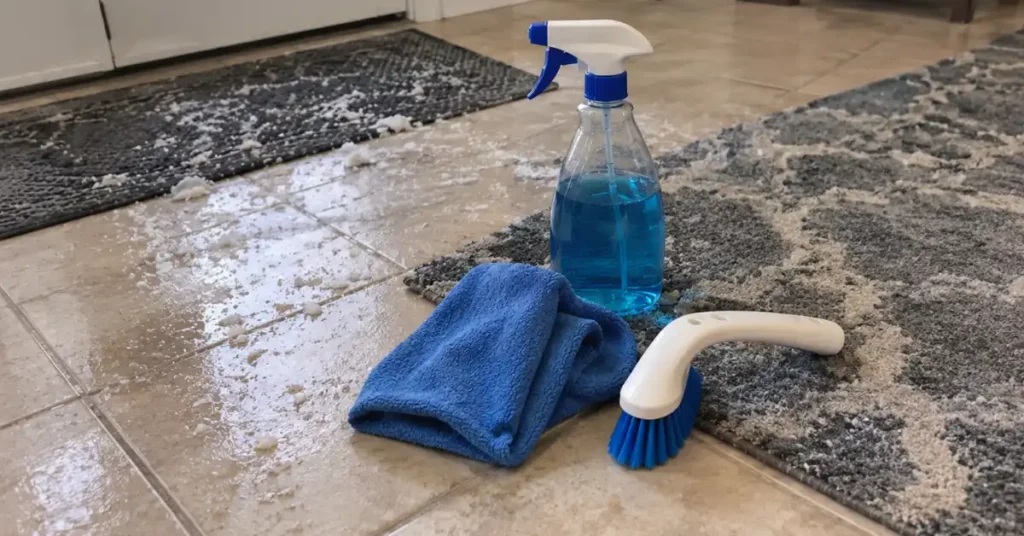
Quick Guide: Salt Stain Cleaning by Floor Type
| Floor type | Best cleaner | Vinegar, OK? | Key tip |
|---|---|---|---|
| Sealed hardwood | pH-neutral wood cleaner, or warm water + drop of dish soap | Use caution; check care instructions. | Damp, never wet. Dry immediately. |
| Older or unsealed wood | Cleaner made for that finish | Avoid | Spot test. Call a pro if unsure. |
| Laminate | Warm water + a little vinegar, or laminate cleaner | Diluted | Barely damp mop. Dry fast. |
| Luxury vinyl plank | Warm water + dish soap, or LVP cleaner | Diluted, usually | Check the manufacturer’s guide. |
| Ceramic and porcelain tile | 1 part vinegar: 3 parts lukewarm water | Yes | Scrub grout lines with a soft brush. |
| Natural stone (marble, granite, slate, travertine) | Mild detergent or warm water, or a stone cleaner | Never | Acids can permanently etch stone. |
| Carpet and area rugs | Vinegar + warm water, dabbed on | ✅ Yes | Blot, don’t scrub. Vacuum when dry. |
| Concrete (garage, basement stairs) | Mild detergent + warm water | Usually okay on unsealed | Rinse well |
Now let’s go through each one.
How to Remove Salt Stains From Hardwood Floors
Hardwood is beautiful. It’s also the floor most likely to get hurt by salt and by the wrong cleaning method.
The Great Vinegar Debate
Here’s where you’ll find mixed advice online, so let’s be honest about it.
- Some cleaning companies, like Merry Maids, recommend a weak mix of 1/3 cup of distilled white vinegar per 1 gallon of water, applied lightly.
- Some flooring companies, like Nydree Flooring, warn that vinegar can strip the finish and leave residue, and recommend a cleaner made for salt stains instead.
- Homes & Gardens warns against vinegar on unsealed wood, since the acid can cause swelling and residue andcracking.
Our advice: Start gentle. Check your floor manufacturer’s care guide. If you’re not sure, use a pH-neutral hardwood cleaner or warm water with a tiny drop of dish soap. That’s the safest bet for most finishes.
Step-by-Step
You’ll need:
- Vacuum with a soft brush head (not a beater bar)
- Microfiber mop or cloths
- pH-neutral hardwood cleaner, or warm water and dish soap
- Spray bottle
- Dry towels
Steps:
- Vacuum the area with a soft brush head to remove loose salt crystals.
- Lightly mist the stained area with your cleaner. Don’t soak it.
- Let it sit for a minute or two to loosen the residue.
- Wipe with a damp microfiber cloth, moving with the grain of the wood.
- Clean again with a clean, damp cloth to remove any residue cleaner.
- Dry completely with a towel.
- Repeat for stubborn spots. Old buildup may take a few rounds.
Old Rochester Hardwood: Extra Care
Many homes in Rochester neighborhoods like Park Avenue, the South Wedge, and Corn Hill have original hardwood floors. Some older finishes react badly to water or cleaners.
- Always spot test in a closet or under furniture
- Use as little liquid as possible
- If the finish turns white or cloudy, stop and call a floor professional
- Deep scratches or worn-through finishes need refinishing, not cleaning
How to Remove Salt Stains From Tile and Grout
Ceramic and porcelain tile are tough. They can handle a stronger clean.
Step-by-Step
- Pick up any loose salt first by sweeping or vacuuming the floor.
- Combine one part white vinegar with three parts warm water. Homes & Gardens suggests this mix for tile and laminate floors.
- Spread the solution over the stained spots and leave it for 10 to 15 minutes so the salt residue breaks down.
- Work along the grout lines with a soft-bristled brush.
- Go over the floor with a mop and plain water to rinse away the solution.
- Finish by drying the surface with a towel or a dry mop.
Grout tip
Salt sinks into grout lines and makes them look gray and dingy. A soft toothbrush and your vinegar mix work wonders. If your grout is sealed, it’ll clean up faster.
Natural Stone: Handle With Care
Got marble, granite, slate, limestone, or travertine in your entry? Do not use vinegar; it warns that vinegar can permanently etch stone floors. The same goes for lemon juice and other acidic cleaners.
What to Use Instead
- Warm water with a few drops of mild dish soap
- A pH-neutral cleaner labeled safe for natural stone
- A soft microfiber mop
Steps: Vacuum, damp mop with the mild solution, rinse with clean water, and dry. For heavy buildup or dull patches, call a stone care pro.

How to Remove Salt Stains From Carpet and Area Rugs
Salt stains on carpet look like white, crusty rings. Leave them too long, and they can wear down fibers.
Step-by-Step
- Wait until the spot is completely dry, since damp salt tends to spread.
- Vacuum well to pick up the dried salt crystals.
- Combine equal amounts of white vinegar and warm water in a bowl or spray bottle.
- Press a clean white cloth soaked in the solution onto the stain, using a dabbing motion rather than rubbing.
- Take a dry cloth and blot the area to absorb the dissolved salt.
- Keep repeating the dab-and-blot cycle until the white ring disappears.
- Dab the area with plain water to rinse out the vinegar, then blot it dry.
- When the carpet is totally dry, vacuum once more to lift the fibers back up.
Tip: Always test on a hidden corner first, especially on wool or hand-knotted rugs. For valuable or antique rugs, go to a rug cleaning professional.
What About Entry Mats?
Your entry mats take the biggest beating. That’s their job!
- Shake them out outdoors every few days
- Vacuum both sides weekly
- Wash or hose them off on a milder day if the label allows
- Replace worn-out mats. Flat, crushed mats stop trapping salt.
Laminate and Luxury Vinyl Plank
Laminate and LVP are popular in newer Rochester-area homes and renovated rentals. They’re fairly salt-resistant, but water can damage laminate at the seams.
- Vacuum first
- Use a barely damp microfiber mop with a laminate or vinyl cleaner, or a light vinegar mix if your manufacturer allows it
- Never pour water directly on the floor
- Dry right away
Don’t Forget These Salt Hotspots
Salt sneaks into more places than you’d think.
- Stairs: Especially the bottom few steps near the front door
- Baseboards near entry doors (salty slush splashes)
- Mudroom benches and cubbies
- Garage-to-house entry door
- Basement stairs, if you come in through the garage
- Pet areas: food bowls, beds, and crates
- Under the boot tray
- The car: Floor mats track salt right back inside
How to Prevent Salt Stains in the First Place
Cleaning salt is good. Stopping it at the door is better.
The Two-Mat System
- Outside: A rough, scraper-style mat knocks off snow and salt
- Inside: An absorbent mat catches melting slush
Homes & Gardens calls a doormat one of the easiest ways to keep chemical particles off your floors.
The Boot Station
- Put a boot tray by every door you use
- Add a small bench so people can sit and take boots off
- Keep slippers nearby for family and guests
- A basket of cozy socks for guests is a nice touch
Daily 2-Minute Habit
During snow season, give your entryway a quick daily clean:
- Vacuum or dry mop the entry
- Wipe any white marks with a damp cloth
- Dry the floor
Two minutes a day beats two hours of scrubbing in March.
Pet Paws
Salt is tough on dogs, too.
- Wipe paws with a damp towel after every walk
- Keep a towel hanging by the door
- Consider booties for long winter walks
- Use pet-friendly ice melt on your own steps and driveway
Be Smart With Your Own Ice Melt
- Use only what you need. More salt doesn’t mean more safety.
- Shovel first, then salt.
- Sweep up extra salt once the ice is gone, so it doesn’t get tracked in.
Your Winter Salt-Care Schedule
| When | What to do |
|---|---|
| Every day | Vacuum or dry mop the entryway. Wipe paws. |
| Every few days | Shake out entry mats. Damp-wipe white marks. |
| Weekly | Clean all entry and hallway floors by floor type. Clean the boot tray. |
| Monthly | Deep clean grout. Vacuum both sides of rugs. |
| Early spring | Full deep clean of floors, rugs, and baseboards to remove winter buildup. |
Common Mistakes to Avoid
- Mopping without vacuuming first. You’ll grind salt into the finish.
- Soaking hardwood. Water is wood’s enemy.
- Using vinegar on stone. Etching is permanent.
- Scrubbing carpet stains. It spreads the stain and frays fibers.
- Using a beater bar on hardwood. It can scratch and scatter salt.
- Ignoring it until spring. Salt does more damage the longer it sits.
- Using harsh cleaners or ammonia on wood. They can dull and damage the finish.

Frequently Asked Questions
Keep Winter at the Door
Rochester winters aren’t going anywhere. But salt stains don’t have to take over your floors , vacuum first. Use the right cleaner for each floor. Dry as you go and set up a good mat-and-boot system so most of the salt never makes it past the door. Your floors will look great when spring finally shows up.
How We Can Help
At Bright Nest Cleaners, we’re a local Rochester cleaning team, and we know what our winters do to floors. From original hardwood in the city to tile entryways in the suburbs, we clean with the right method for each surface.
Here’s how we can help this winter:
- Winter floor care: cleaning salt residue from hardwood, tile, laminate, and vinyl
- Entryway and mudroom detailing: floors, baseboards, benches, and boot areas
- Recurring winter cleaning: weekly or biweekly visits so salt never builds up
- Spring deep cleaning: a full reset after the snow finally melts
- Old-home care: gentle cleaning for original hardwood and older finishes
We’re not a floor refinishing or rug restoration company. If your floors need sanding, refinishing, or specialty rug care, we’ll tell you honestly.
Where we clean: Rochester and nearby towns including Brighton, Pittsford, Penfield, Webster, Fairport, Irondequoit, Greece, Henrietta, Gates, and Chili.
You’ll get the same background-checked cleaner, clear pricing before we start, and a local team that answers its own phone.
Insured, Bonded, Guaranteed
We’re insured, bonded, and local to Rochester. Every clean is handled with care for your home and its materials, never a one-size-fits-all approach.
Get your free winter cleaning quote and keep salt off your floors all season.
Sources
- Merry Maids, How to Remove Salt Stains from Wood Floors or Tile: https://merrymaids.com/how-to/how-remove-salt-stains-wood-floors-or-tile
- Homes & Gardens, How to Clean Salt Residue Off Floors: https://www.homesandgardens.com/solved/how-to-clean-salt-residue-off-floors
- Nydree Flooring, How to Remove Salt from Hardwood Floors in Winter: https://nydreeflooring.com/blogs/news/remove-salt-hardwood-floors-winter
- US EPA, Winter Is Coming! And With It, Tons of Salt on Our Roads: https://www.epa.gov/snep/winter-coming-and-it-tons-salt-our-roads